2025 Outstanding Conservationist
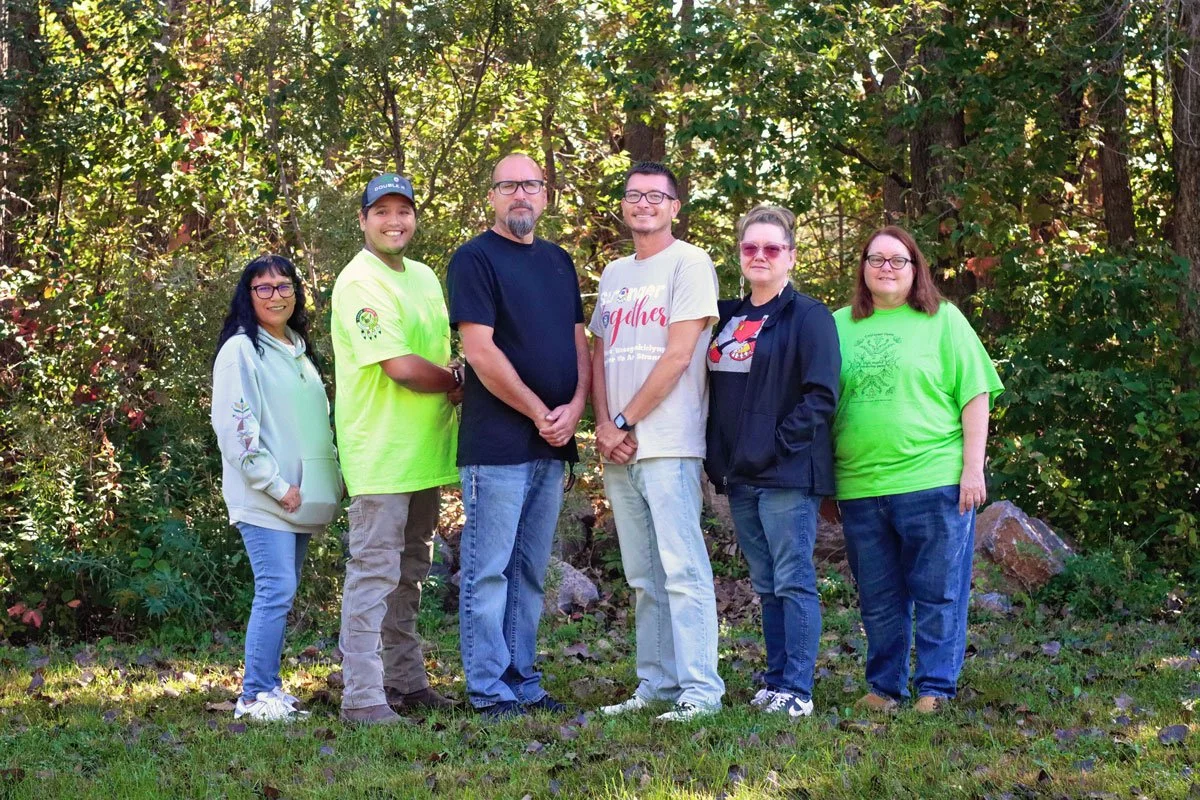
Lower Sioux Indian Community
Redwood Soil & Water Conservation District, Southwest Area V Finalist
2025 Redwood SWCD Conservationist of the Year: Lower Sioux Indian Community
The 2025 Redwood SWCD Outstanding Conservationist of the Year is the Lower Sioux Indian Community (Cansayapi), recognized for its leadership in sustainable agriculture, land stewardship, and culturally grounded conservation across the Minnesota River Valley bluffs and floodplain. Their work integrates Dakota values with modern conservation practices, improving soil health, water quality, wildlife habitat, and community resilience.
Conservation Practices
Forestry Improvement and Establishment
Forestry improvement is an essential practice for managing invasive species on the wooded Minnesota River Valley bluffs. The Lower Sioux Indian Community leads this work by focusing on buckthorn removal and other undesirable species to restore these areas to their historic oak savanna habitat. Following removal, native grasses and trees such as dogwoods and oaks are seeded to re-establish diverse, resilient plant communities.
District staff have provided technical guidance on selective tree removal to reduce stand density and allow native species room to thrive. For additional guidance and funding, the Lower Sioux partners closely with the Bureau of Indian Affairs (BIA) and the U.S. Fish & Wildlife Service (USFWS), ensuring long-term stewardship of these forested areas.
Wind Erosion Practices
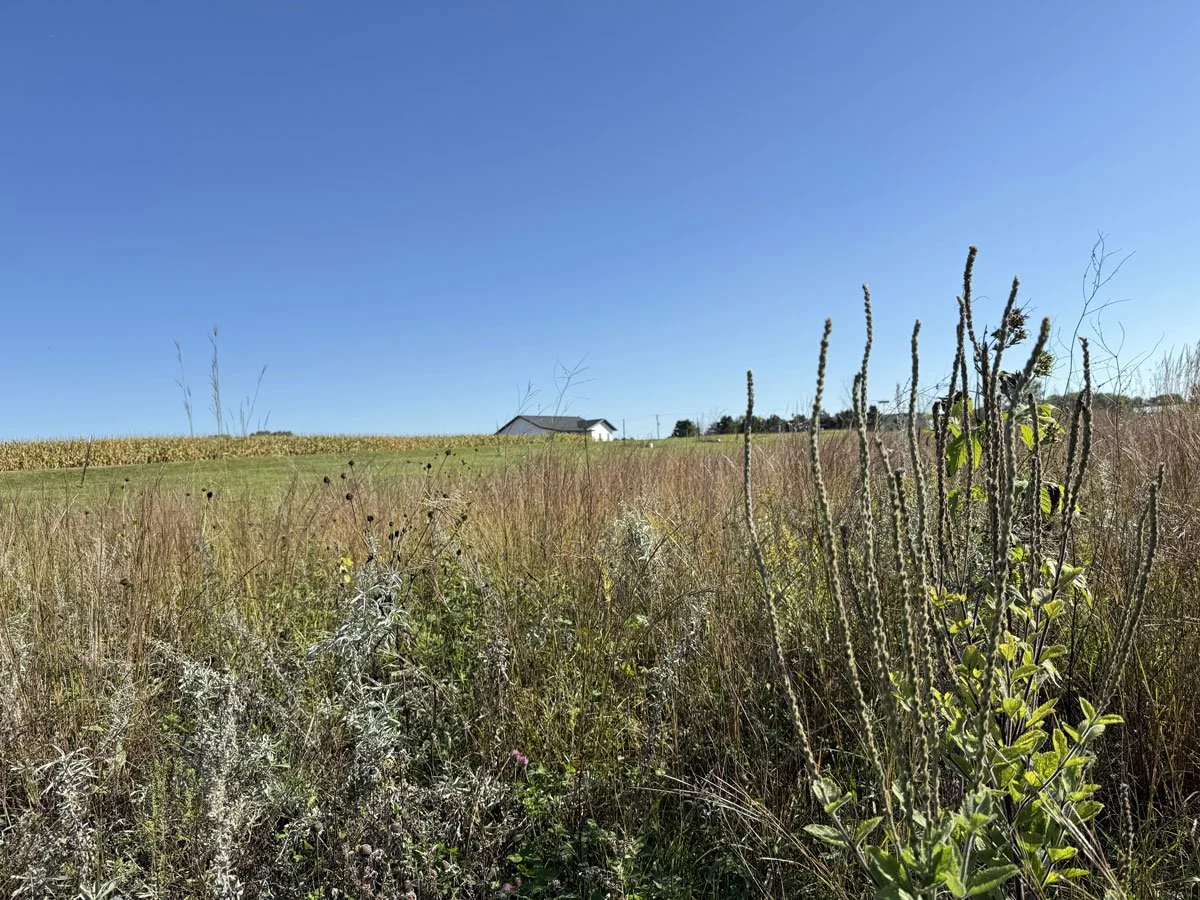
The Lower Sioux Indian Community manages productive agricultural lands in southwestern Minnesota, where sandy, loamy, and silty soils are highly susceptible to wind erosion. To address this challenge, the community employs farming systems focused on soil coverage, including cover cropping and reduced-tillage or no-till practices. Tillage is often delayed until spring to preserve crop residue through winter, while cover crops maintain a living root system that protects soil from wind.
Over time, these practices have been successfully integrated into crop rotations with support from local staff and conservation programs. State cost-share and the Environmental Quality Incentive Program (EQIP) have provided critical financial assistance to expand these wind erosion control measures across tribal cropland.
Pasture Improvement and Management
Pasture and grazing lands within the Lower Sioux Indian Community are managed with the same emphasis on soil cover and resilience that guides cropland management. Conservation practices such as managed grazing, extended rest periods, and maintaining diverse perennial cover help reduce erosion while improving forage quality and soil health. These efforts are especially important on sensitive soils and sloping landscapes that are prone to runoff and degradation.
Local staff knowledge, state cost-share, and EQIP funding have helped refine and expand pasture management practices over time. The result is a more resilient grazing system that supports livestock production, protects water resources, and enhances wildlife habitat across tribal lands.
Cropland and Soil Health
Cropland Management
The Lower Sioux operation manages over 500 acres on the bluff south of the Minnesota River, growing corn, soybeans, and hemp. Nutrient management is overseen by Centrol Crop Consulting, which uses 2.5‑acre grid soil sampling every 3–4 years to develop prescriptions for variable-rate fertilizer applications. Farm manager Joey Goodthunder favors this precision approach because it targets nutrients only where needed, rather than applying uniform rates across highly variable soils.
To reduce nutrient losses on sandy soils, nitrogen is applied in the spring with stabilizers instead of in the fall. Potassium and phosphorus are applied in the fall and lightly incorporated with vertical tillage equipment, and lime is being applied to address high soil pH and improve fertilizer efficiency. The nutrient management plan was developed and funded through EQIP and Minnesota Department of Agriculture (MDA) grants in close cooperation with district staff.
Following soybean harvest, local cooperatives fertilize for the next year’s corn crop by applying MAP and DAP in the fall and lightly incorporating them to minimize runoff and volatilization losses. In spring, nitrogen in the form of urea with inhibitors is applied just ahead of corn planting. As part of a conservation crop rotation, hemp can be planted after soybeans to break pest cycles and diversify production, requiring less fertilizer than corn while contributing to soil health. After harvest, hemp is cured in the field, baled, and used by the tribe’s industrial hemp program to build local homes.
Crop residue from corn and hemp is left on the field over winter to protect soil from erosion and improve water infiltration. Where fall tillage is needed on heavier soils, a shallow vertical tillage pass is used to break surface crust and size residue without excessive soil disturbance. In spring, soybeans are no-till planted with a drill directly into corn or hemp stubble, with hydraulic downforce critical to maintaining uniform seed depth in variable no-till conditions.
Building on earlier trials funded by a local water plan, the Lower Sioux are expanding cover crop use with support from EQIP. Following corn harvest, cereal rye is drilled into the stubble and left through spring to improve soil health and protect vulnerable fields. Soybeans are then no-till drilled into the standing rye and the rye is terminated a few days after planting, a system Goodthunder plans to expand in coming years.
Integrated Pest Management
The Lower Sioux Indian Community uses a proactive, threshold-based approach to pest management through close partnership with Centrol Crop Consulting. Diverse rotations that include hemp and oats alongside corn and soybeans help disrupt pest and disease cycles, a core principle of Integrated Pest Management (IPM). Weekly crop scouting by Centrol agronomists allows pesticide applications to be made only when economic thresholds are reached, minimizing unnecessary chemical use.
This approach aligns with Dakota cultural values of environmental stewardship by reducing chemical inputs while protecting crop yields. Through this collaboration, the Lower Sioux stay ahead of evolving pest challenges, supporting long-term agricultural sustainability and ecological health on tribal lands.
Water, Habitat, and Wildlife
Buffer Practices
The Lower Sioux Indian Community has long prioritized protecting sensitive areas with buffers of deep-rooted native vegetation. In 2015, the Conservation Reserve Program (CRP) was used to remove flood-prone cropland adjacent to eroding Minnesota River banks from production and establish native grasses. Early establishment was challenging due to repeated flooding, but the area has since flourished under active management.
Today, these buffers are maintained through mowing, prescribed burning, and targeted invasive species control using minimal herbicides. The CRP contract was recently renewed for another 10 years, ensuring continued water quality and habitat benefits. Additional wetland-edge buffers have been enhanced with native grasses to intercept runoff from nearby fields, supported by alternative funding sources such as BIA programs because traditional easement tools do not apply on tribal lands.
Shoreline Stabilization
In 2015, the Lower Sioux began working with district staff to protect a culturally significant granite formation on the Minnesota River floodplain. Initial efforts enrolled nearby fields in CRP with the goal of stabilizing the streambank using deep-rooted native grasses, but frequent flooding limited success. By 2017, the Office of the Environment sought a more durable solution, leading to a proposed riprap streambank stabilization project designed with Area II and local partners.
Although the project was delayed due to cost, the Office of the Environment recently secured partial funding from the BIA and is working with district staff to leverage additional EQIP and district cost-share resources. With funding now aligning, construction is anticipated within the next few years, providing permanent protection for this culturally important site.
Wetland Restoration and Management
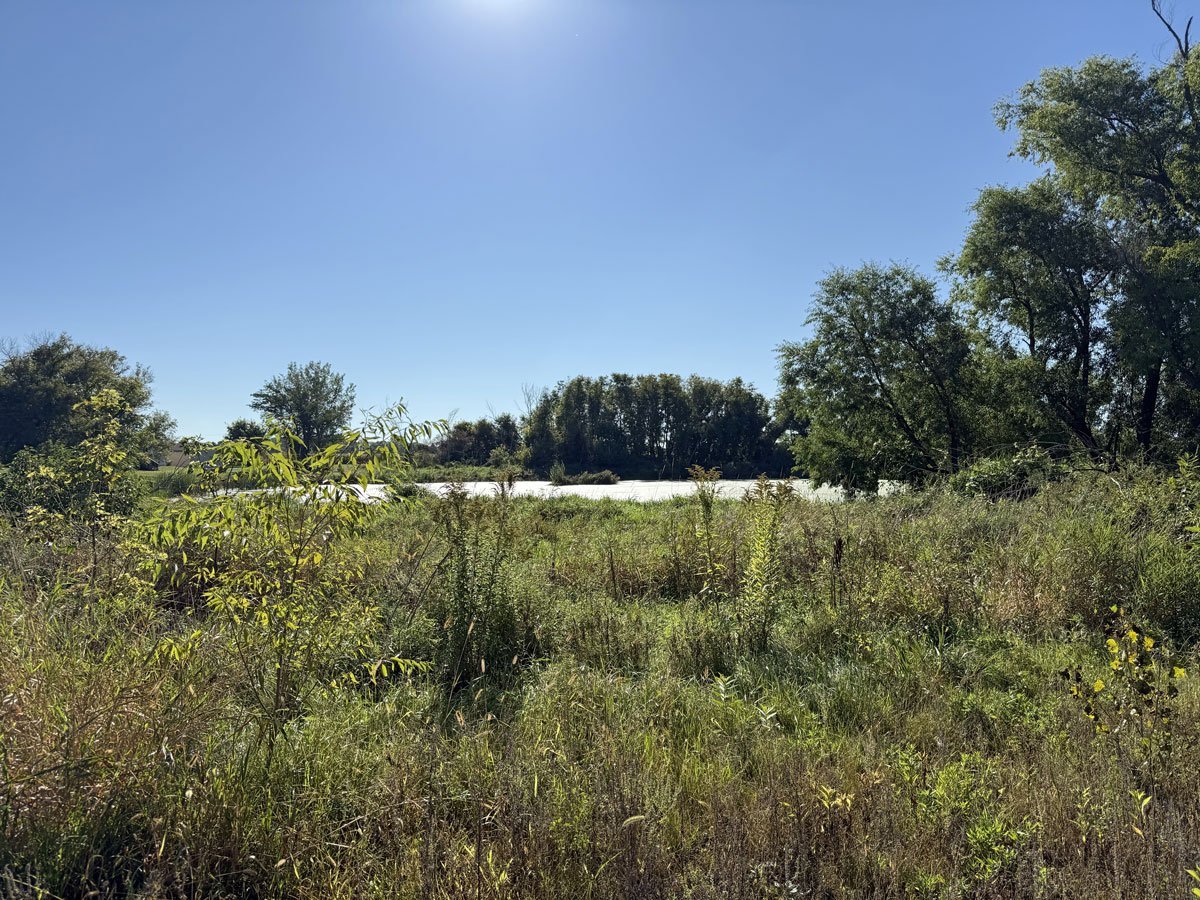
Wetlands make up roughly 90 of the 1,200 acres of Lower Sioux trust land on the Minnesota River bluff and floodplain. Because federal trust land cannot be placed in traditional permanent easements, the Office of the Environment, led by staff such as Deb Dirlam, is developing alternative long-term protection strategies.
One key partnership is with the BIA “Circle of Flight” program, which supports wetland, waterfowl, and wild rice restoration on tribal lands. A 2015 Circle of Flight grant funded wild rice seed purchases from the Leech Lake Band of Ojibwe, jump-starting wild rice restoration in locations such as the gravel pit pond, Hanks Lake, and Pendleton Pond. The rice established so well that it now reseeds naturally, eliminating the need for continued seed purchases.
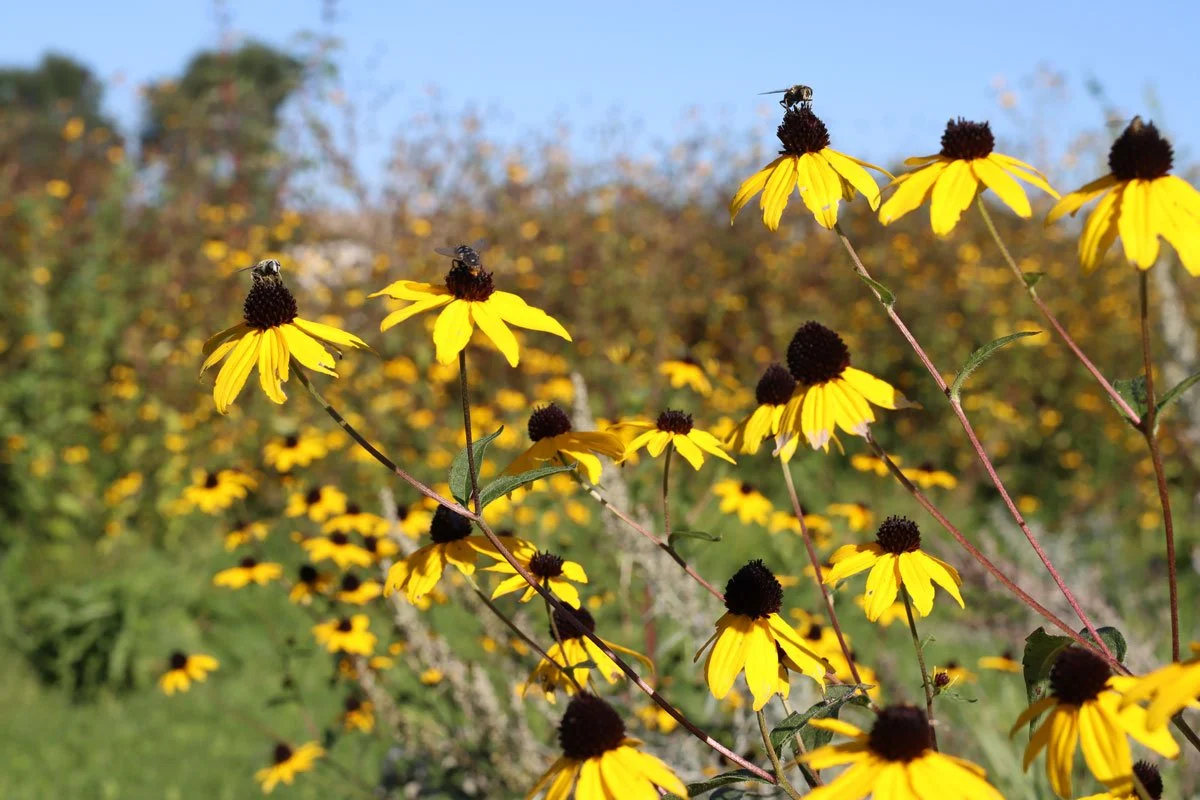
In 2021, the Lower Sioux and BIA installed floating wetland mats planted with native aquatic species to enhance habitat, nutrient uptake, and water filtration. Additional BIA funding in 2022 supported invasive species removal and vegetation improvements in and around wetlands. More recently, the tribe has secured EQIP funding for 2.2 acres of pollinator habitat around a wetland, creating an extended buffer that supports bees and other pollinators while further protecting water quality.
Wildlife Practices
Wildlife conservation on Lower Sioux lands is closely tied to water quality, habitat restoration, and sustainable land use. Conservation farming practices such as cover crops, minimal tillage, and diverse rotations improve habitat structure and food resources for many species. The Office of the Environment conducts water quality monitoring with the help of summer interns and implements wetland protection and enhancement projects that support waterfowl and other wildlife dependent on healthy aquatic systems.
Beyond wetlands, broader efforts to restore native prairie, oak savanna, and other historical habitats further enhance biodiversity. Federal grant programs through the BIA and USFWS help fund invasive species control and native habitat restoration, reinforcing the community’s long-term vision of a healthy, resilient ecosystem.
Other Soil, Water, and Forest Practices
Guided by the Lower Sioux philosophy of looking seven generations ahead and behind, Farm Manager Joey Goodthunder continually seeks opportunities to improve the land. In late 2023, he partnered with district staff to enroll in the Minnesota Agricultural Water Quality Certification Program (MAWQCP), and by early 2024 the Lower Sioux achieved full water quality certification for their agricultural practices.
While the community was already using strong conservation measures such as no-till and diverse crop rotations that include hemp, Goodthunder chose to exceed program requirements. Through the assessment process, he identified key improvements, including:
Implementing a more robust nutrient and pest management strategy using 2.5‑acre grid sampling, variable-rate fertilizer applications, and more intensive scouting and threshold-based pest control.
Expanding the use of cover crops, especially cereal rye after corn, to build soil health and protect vulnerable ground.
These enhancements improved the MAWQCP score and significantly strengthened the long-term sustainability of tribal farming operations. To help with implementation costs, the Lower Sioux secured program-linked grants that can provide up to 75 percent of project costs or $5,000, easing the transition to advanced management.
On the steep bluff country above the Minnesota River Basin, concentrated gully erosion has been a persistent challenge. Beginning in 2019, tribal elders and district engineers worked together to design conservation practices that would eliminate active gully areas without sacrificing cropland. Farmable water and sediment control basins were identified as a key tool; these bermed structures temporarily store runoff during storms, stopping erosion while slowly releasing water over roughly 30 hours to protect crops.
In the fall of 2020, the district supervised the construction of two such basins funded up to 75 percent through EQIP and state cost-share, with the Lower Sioux paying the remainder. After several years of successful operation, Goodthunder and district staff identified another site in 2024 where three additional basins could divide a 12‑acre watershed into smaller, more manageable units. Field surveys and design work were completed with the Southwest Technical Service Area, and Goodthunder’s status as a historically underserved farmer helped his EQIP application rank high enough for funding approval. As soybean harvest concludes, district staff will stake the project and coordinate berm construction, continuing the community’s effort to permanently address gully erosion.
Leadership in the Community
The Lower Sioux Indian Community (Cansayapi) is a federally recognized Dakota community in southern Minnesota governed by a five‑member elected Tribal Council. The council oversees governance, economic development, cultural preservation, housing, education, health, natural resources, and intergovernmental relations, while strengthening Dakota identity through language revitalization and cultural programs.
A wide range of tribal agencies and initiatives reflect the community’s commitment to land, water, and people. The Lower Sioux Office of the Environment manages land, water, and wildlife conservation, including prairie restoration and traditional food sovereignty projects supported in partnership with the BIA. The Cansayapi Hemp Program advances sustainable agriculture and economic opportunity through industrial hemp production, while the Lower Sioux Bison Project reconnects the community with traditional food sources and grassland ecology.
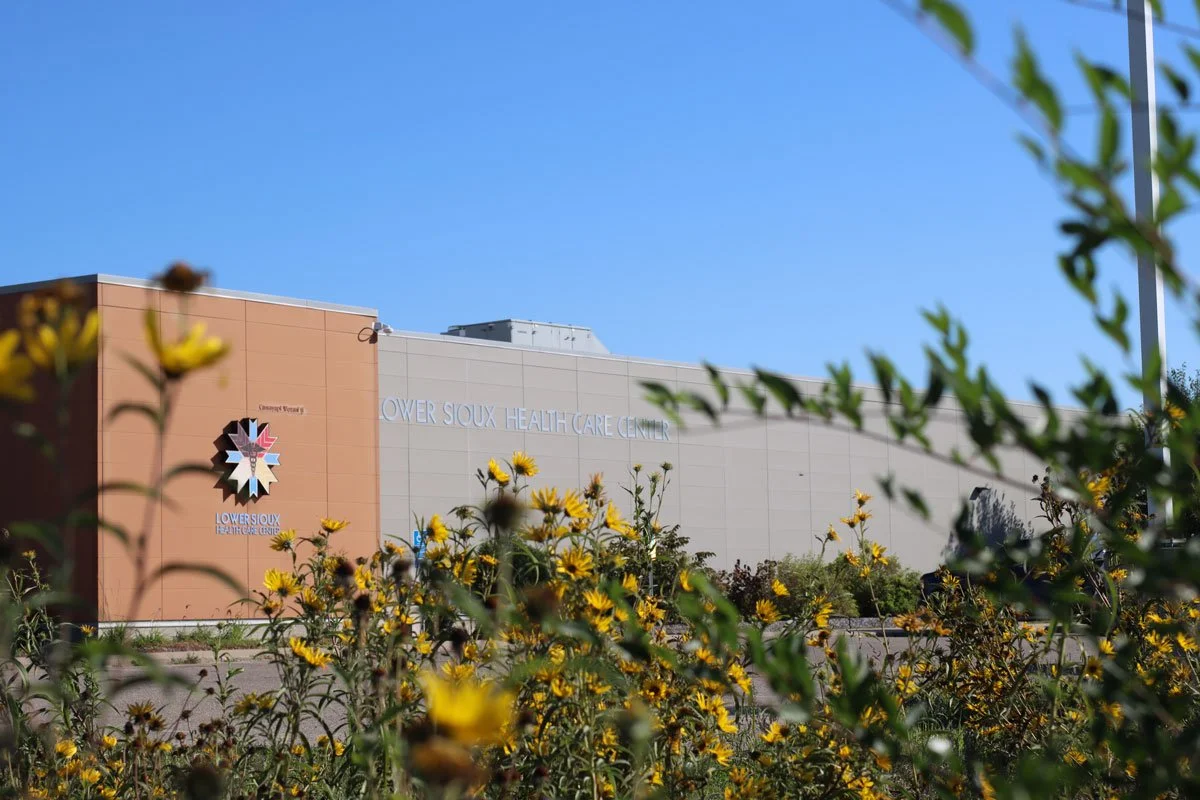
Education and wellness are equally central to the community’s vision. Early Head Start programs provide culturally grounded early childhood education, and partnerships with local schools help integrate Dakota language and history into classrooms. The Lower Sioux Health Care Center and community health initiatives address physical, mental, and cultural wellness. Events such as the annual Wacipi (powwow) and ongoing Dakota language programs foster intergenerational ties and cultural pride, reinforcing the community’s holistic approach to conservation and sovereignty.
2025 Conservationist of the Year
The Lower Sioux Indian Community is a deserving recipient of Minnesota’s Outstanding Conservationist Award for its integrated approach to agriculture, conservation, and cultural revitalization. As original caretakers of the land, the community is restoring ancestral foodways and ecological balance through regenerative practices such as cover cropping, reduced tillage, native habitat restoration, and innovative water management structures.
Their work goes beyond production agriculture, representing a powerful act of reclamation and resilience. By growing traditional and modern crops—including corn, soybeans, hemp, and culturally significant plants—while blending traditional ecological knowledge with contemporary conservation science, the Lower Sioux advance food sovereignty and environmental stewardship. Their commitment to community education, youth engagement, and collaborative leadership offers a model for both Indigenous and non-Indigenous farming communities and reflects a deep respect for the land and future generations at the heart of true conservation.